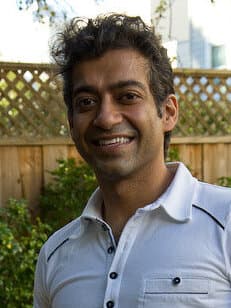
Naval Ravikant
The Reading Philosopher

Naval Ravikant's Reading Habits

Naval Ravikant — entrepreneur, angel investor, and co-founder of AngelList — is as well known for how he thinks as for what he has built. His reputation as one of Silicon Valley's most original philosophers rests heavily on a single daily practice: reading. Naval reads roughly one to two hours every day, a habit he credits in The Almanack of Naval Ravikant as responsible for much of his intelligence and material success. He is not, however, a conventional reader. He abandons books freely, reads multiple titles simultaneously, and measures progress not in pages finished but in concepts genuinely understood. His approach — built around curiosity rather than obligation — offers a practical model for anyone who wants reading to become a genuine superpower rather than a chore.

1-2
Hours/Day
6+
Recommended Books

Photo: Elias Bizannes · CC BY-SA 2.0

How many books does Naval Ravikant read?

Their reading focuses on Philosophy, science, economics, mathematics.

Reading as a Meta-Skill, Not a Metric

Naval has said he no longer tracks books read and does not care about the count. What he cares about is whether his thinking has actually expanded. In The Almanack of Naval Ravikant, compiled by Eric Jorgenson, he explains: "I probably read one to two hours a day. That puts me in the top .00001 percent." He attributes this habit — not any single book or course — to whatever intelligence and financial success he has accumulated. For Naval, reading is the foundational meta-skill underneath all others: a compounding asset that pays dividends for life rather than for a quarter.

Read What You Love Until You Love to Read

Naval's most quoted piece of reading advice is also his simplest. On his personal site nav.al, he states: "Read what you love until you love to read." The principle deliberately sidesteps assigned reading lists or self-improvement curricula. He argues that curiosity — not willpower — is the sustainable engine for lifelong learning. Schools, he observes, replace curiosity with compliance; his remedy is to start wherever genuine interest lives and follow it outward, even if that means comics, science fiction, or philosophy in whatever order appeals. The love of reading, in his view, cannot be forced — only cultivated.

The Freedom to Abandon — and the Habit of Rereading

Naval holds two seemingly opposite positions about books: he will drop them instantly, and he will reread the great ones for years. In the Almanack he states: "I feel no obligation whatsoever to finish the book. I don't believe in delayed gratification when there are an infinite number of books out there to read." Most nonfiction, he notes, makes one central point and then repeats it with examples — once you have the insight, the book has served its purpose. At the same time, he has described rereading David Deutsch's The Beginning of Infinity and The Fabric of Reality "over and over again until I understand them fully," treating great books as inexhaustible objects of study.

Go Deep with Foundational Texts

While Naval reads broadly, he is emphatic about one category: foundational originals. He advises reading the source texts of a field rather than modern summaries or books written primarily to sell. On his website he counsels readers to "stick to science and to stick to the basics. Read originals and read classics." He is particularly insistent on math, hard sciences, and microeconomics as the bedrock of clear thinking. His recommendation list features Richard Feynman's physics lectures, Karl Popper's Objective Knowledge, and multiple works by David Deutsch alongside economic history and evolutionary biology — disciplines chosen because their core ideas have survived the harshest scrutiny.

Pace as a Quality Signal

Naval reframes the popular obsession with reading speed. In the Almanack he writes: "Reading a book isn't a race — the better the book, the more slowly it should be absorbed." He has also noted that "the smarter you get, the slower you read," because a genuinely rigorous text demands that each sentence actually land before the next one begins. This runs counter to many productivity gurus, but it reflects Naval's broader point that understanding — not completion — is the goal. If you can speed through something without friction, he implies, it probably wasn't stretching your mind in the first place.

What Readers Can Learn from Naval's Approach

Naval's reading philosophy distills into a few transferable habits: follow curiosity rather than obligation, keep multiple books open so mood and energy guide what you pick up, abandon freely without guilt, slow down for books that resist easy comprehension, and return to great texts repeatedly instead of chasing novelty. Underlying all of it is a conviction he expressed on nav.al: "The means of learning are abundant. It's the desire to learn that's scarce." Reading faster matters far less than reading more — and reading more becomes effortless once curiosity, not duty, is in the driver's seat.


Naval Ravikant's Reading Philosophy

"Naval treats reading as a compounding intellectual investment rather than a productivity metric. He prioritizes foundational science, philosophy, and mathematics, reads from genuine curiosity, abandons unrewarding books without guilt, and returns to transformative texts repeatedly. Understanding concepts — not accumulating titles — is the only outcome worth pursuing."

- Naval Ravikant

Notable Quotes on Reading

Read what you love until you love to read.
Naval Ravikant, nav.al
I probably read one to two hours a day. That puts me in the top .00001 percent.
The Almanack of Naval Ravikant (Eric Jorgenson)
I feel no obligation whatsoever to finish the book. I don't believe in delayed gratification when there are an infinite number of books out there to read.
The Almanack of Naval Ravikant (Eric Jorgenson)
Reading a book isn't a race — the better the book, the more slowly it should be absorbed.
The Almanack of Naval Ravikant (Eric Jorgenson)
The means of learning are abundant. It's the desire to learn that's scarce.
Naval Ravikant, nav.al

How Naval Ravikant Reads

Reading Methods

  • Read 1-2 hours daily — treat it as a non-negotiable investment in compounding knowledge
  • Follow genuine curiosity rather than prescribed reading lists or self-improvement programs
  • Keep many books open simultaneously and select by mood, not obligation
  • Abandon books freely the moment they stop providing value — there are infinite alternatives
  • Slow down for books that resist easy comprehension; difficulty is a quality signal, not a failure
  • Reread transformative books repeatedly rather than always chasing new titles
  • Prioritize original foundational texts over summaries or books written primarily to sell

Key Insight

Naval's reading philosophy collapses to one idea: sustained curiosity compounds into wisdom in a way that forced reading never can. Reading faster helps you cover more ground — but reading what genuinely captivates you is what makes the ground worth covering. Sharpen your speed so the mechanics never throttle your appetite, then let curiosity determine the destination.

Naval Ravikant's Recommended Books

Books Naval has publicly recommended or credited as influential.

The Beginning of Infinity

David Deutsch

Naval describes it as one of the only books in a decade that "literally expanded the way that I think"; he rereads it until he fully understands it.

Meditations

Marcus Aurelius

Naval called it "absolutely life changing" and recommends it as a first book for anyone interested in philosophy.

Sapiens

Yuval Noah Harari

Naval describes it as "the best book of the last decade I have read," praising its density of ideas.

The Lessons of History

Will & Ariel Durant

A concise distillation of the Durants' eleven-volume Story of Civilization, on his recommended list.

Siddhartha

Hermann Hesse

Naval has said he has "given out more copies of this book than any other" as an introduction to philosophy.

The Tao of Seneca

Seneca

Naval has called it "the most important audiobook I've ever heard" and his most-listened audiobook.

Frequently Asked Questions

How much does Naval Ravikant read per day?

Naval has stated he reads approximately one to two hours per day, a habit he credits in The Almanack of Naval Ravikant as responsible for much of his intelligence and success. He notes this pace puts him in the top .00001 percent of readers.

What does 'read what you love until you love to read' mean?

It is Naval's core reading principle. It means building a reading habit through genuine interest rather than willpower: start with whatever actually captivates you — fiction, science, philosophy, comics — and let curiosity compound. The love of reading follows naturally; it cannot be forced.

Does Naval Ravikant finish every book he starts?

No. Naval explicitly states: "I feel no obligation whatsoever to finish the book. I don't believe in delayed gratification when there are an infinite number of books out there to read." He often reads the most valuable sections and moves on once he has grasped the central insight.

What kinds of books does Naval Ravikant recommend?

Naval emphasizes foundational texts over popular nonfiction — originals and classics in science, mathematics, philosophy, and economics. His list spans physics (Feynman, Deutsch), philosophy (Marcus Aurelius, Popper), and history (the Durants). He advises avoiding books written primarily to make money.

What is Naval Ravikant's most recommended book?

He gives different answers in different contexts: he has called Sapiens "the best book of the last decade," described Siddhartha as the book he has given out more than any other, and credited The Beginning of Infinity as one of the only books in a decade that made him meaningfully smarter.

Why does Naval say the smarter you get the slower you read?

Naval argues a great book demands that every sentence land before you move on. As your thinking sharpens, you recognize more nuance and push back harder on each claim — which naturally slows comprehension. As he puts it, "the better the book, the more slowly it should be absorbed."

Read Like Naval Ravikant

Naval's philosophy of reading widely benefits from faster reading speed. Read Faster helps you explore more books and topics, making it easier to find the rare gems worth rereading.

40%+
Speed Improvement
Research-backed gains
90%+
Comprehension
We track understanding
287
Lessons
Structured training

Join 10,000+ readers on the waitlist — free to start, no credit card.