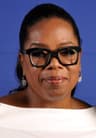
Elon Musk
The Self-Taught Polymath

Elon Musk's Reading Habits

Elon Musk — founder of SpaceX, Tesla, and multiple other companies — has never held a degree in aerospace engineering or rocket propulsion. He taught himself. When people ask how he learned enough to design and build rockets, his answer is characteristically direct: "I read books." That habit started very young. Growing up in Pretoria, South Africa, Musk reportedly spent his childhood immersed in books rather than in the social world of his peers. His brother Kimbal told biographer Ashlee Vance that it was not unusual for Elon to read for ten hours a day. That foundation of voracious, self-directed reading became the engine behind one of the most unusual intellectual careers in modern history — and it offers lessons for anyone who wants to learn faster and think more clearly.

10 (as a child)
Hours/Day
6+
Recommended Books

How many books does Elon Musk read?

Their reading focuses on Physics, engineering, science fiction, biography.

A Childhood Defined by Books

Musk grew up in Pretoria during the 1970s and 1980s, and by his own account, books were his primary companions. In a 2017 Rolling Stone cover story, Musk said: "I was raised by books. Books, and then my parents." The context matters: after his parents divorced around 1979, Musk — then roughly nine years old — chose to live with his father in part because his father owned an Encyclopaedia Britannica set. He worked his way through it. His father told Vance that when the family attended social events, Elon would slip away to find the host's library. Kimbal Musk confirmed to Vance that ten-hour reading days were common. Science fiction dominated those early years, along with philosophy, biography, and any technical subject he could find.

How Elon Musk Taught Himself Rocket Science

When Musk decided around 2001 that he wanted to send a greenhouse to Mars, he discovered that rocket launches cost tens of millions of dollars. Rather than accept those prices, he set out to understand why rockets cost so much — which first required understanding rockets. He contacted aerospace consultant Jim Cantrell, who became SpaceX's first VP of business development. Cantrell later described it: "He'd been borrowing all my college textbooks on rocketry and propulsion. Whenever anybody asks Elon how he learned to build rockets, he says, 'I read books.' Well, it's true." The texts Musk studied included Rocket Propulsion Elements, Fundamentals of Astrodynamics, and the International Reference Guide to Space Launch Systems. This two-year self-study, plus conversations with experts, gave Musk enough command of the subject to found SpaceX in 2002.

First-Principles Reading: How Musk Extracts Maximum Value

Musk does not read passively. His approach mirrors what he calls first-principles thinking, which he described in a 2012 Wired interview: "Physics teaches you to reason from first principles rather than by analogy. So I said, okay, let's look at the first principles. What is a rocket made of? ... It turned out that the materials cost of a rocket was around two percent of the typical price." In a January 2015 Reddit AMA he applied this to learning itself: "It is important to view knowledge as sort of a semantic tree — make sure you understand the fundamental principles, ie the trunk and big branches, before you get into the leaves/details or there is nothing for them to hang on to." Musk reads to build mental frameworks, not to accumulate isolated facts.

The Science Fiction That Shaped His Mission

Musk has been explicit about which books shaped his worldview. Isaac Asimov's Foundation series is at the top of that list. In a June 2018 tweet, Musk wrote that the "Foundation Series & Zeroth Law are fundamental to creation of SpaceX" — a direct acknowledgment that science fiction influenced his decision to pursue interplanetary colonization. Douglas Adams's The Hitchhiker's Guide to the Galaxy holds a different but equally significant place. In a CBS interview, Musk explained what Adams taught him: "A lot of times the question is harder than the answer. And if you can properly phrase the question, then the answer is the easy part." He has called Adams his "favorite philosopher." These books gave him frameworks for thinking about civilization and humanity's long-term future.

Elon Musk's Book Recommendations: Engineering and Biography

Beyond fiction, Musk consistently points readers toward technical and biographical works. He described J.E. Gordon's Structures: Or Why Things Don't Fall Down as "really, really good if you want a primer on structural design." He called John Drury Clark's Ignition! "one of my favorite books for learning space travel." For biography, he has repeatedly cited Walter Isaacson's Benjamin Franklin: An American Life: "Benjamin Franklin is one of the people I most admire ... He was an entrepreneur. He started from nothing. He was just a runaway kid." Isaacson's Einstein: His Life and Universe rounds out his recommendations. The pattern is clear: Musk reads to find people who solved hard problems from first principles.

What Readers Can Learn from Musk's Approach

Musk's reading life is about architecture, not volume. Several principles emerge. First, he reads across domains deliberately, pulling physics, engineering, history, and fiction into a single mental model. Second, he treats fundamental principles as the load-bearing structure of knowledge, adding details only once that structure is solid — the semantic tree method. Third, he reads with application in mind: the textbooks he borrowed were preparation for a specific, ambitious goal. Fourth, he follows curiosity without institutional permission, showing that formal credentials are one pathway to expertise, not the only one. For everyday readers, the most transferable lesson is the simplest: pick the books that address the hardest version of your question, and read them with a pencil.
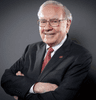

Elon Musk's Reading Philosophy

"Musk treats reading as an engineering activity. The goal is not to finish books but to extract the load-bearing principles from each one — the trunk and big branches — and then connect those principles across fields."

- Elon Musk

Notable Quotes on Reading

I was raised by books. Books, and then my parents.
Rolling Stone cover story (November 2017)
He'd been borrowing all my college textbooks on rocketry and propulsion. Whenever anybody asks Elon how he learned to build rockets, he says, 'I read books.' Well, it's true.
Jim Cantrell, first VP of Business Development at SpaceX (Business Insider)
It is important to view knowledge as sort of a semantic tree — make sure you understand the fundamental principles, ie the trunk and big branches, before you get into the leaves/details or there is nothing for them to hang on to.
Elon Musk Reddit AMA (January 5, 2015)
A lot of times the question is harder than the answer. And if you can properly phrase the question, then the answer is the easy part.
CBS interview, on The Hitchhiker's Guide to the Galaxy

How Elon Musk Reads

Reading Methods

  • First-principles extraction: identify the trunk and big branches of a subject before memorizing details
  • Cross-domain synthesis: deliberately connect physics, engineering, history, and fiction into one mental model
  • Application-driven reading: read with a specific problem or goal in mind, not just for general enrichment
  • Deep active reading: Musk reportedly quoted technical textbooks verbatim, indicating real engagement, not skimming
  • Expert follow-up: supplement books by finding and questioning domain experts directly

Key Insight

Musk's reading life is the mechanism of his career, not incidental to it. He has moved from software to finance to electric vehicles to rockets not by deferring to experts, but by reading until he understood each field well enough to ask the questions experts had stopped asking. The pattern is replicable: identify the load-bearing principles of any field, read the texts that expose them, and connect them to what you already know.

Elon Musk's Recommended Books

Books Elon has publicly recommended or credited as influential.

Foundation (series)

Isaac Asimov

Musk cited this in a 2018 tweet as "fundamental to creation of SpaceX" and credits Asimov with shaping his long-horizon thinking about civilization.

The Hitchhiker's Guide to the Galaxy

Douglas Adams

Musk calls Adams his "favorite philosopher"; the book taught him that asking the right question is harder than finding the answer.

Structures: Or Why Things Don't Fall Down

J.E. Gordon

Musk has called this "really, really good if you want a primer on structural design."

Ignition!

John Drury Clark

Musk described this witty history of liquid rocket propellants as "one of my favorite books for learning space travel."

Benjamin Franklin: An American Life

Walter Isaacson

Musk identifies with Franklin's self-taught, self-made arc: "He started from nothing. He was just a runaway kid."

Superintelligence

Nick Bostrom

Informed Musk's public advocacy for AI safety; he recommended it while warning that AI is "potentially more dangerous than nukes."

Frequently Asked Questions

How did Elon Musk learn rocket science without an engineering degree?

Musk taught himself primarily through textbooks borrowed from aerospace consultant Jim Cantrell around 2001-2002. Cantrell confirmed Musk read texts including Rocket Propulsion Elements and Fundamentals of Astrodynamics, quoting passages verbatim, and complemented the reading with conversations with experts. This preceded the founding of SpaceX in 2002.

What books does Elon Musk recommend most often?

His most frequently cited recommendations include Isaac Asimov's Foundation series, Douglas Adams's The Hitchhiker's Guide to the Galaxy, J.E. Gordon's Structures, John Drury Clark's Ignition!, Walter Isaacson's biographies of Franklin and Einstein, and Nick Bostrom's Superintelligence.

How many hours a day did Elon Musk read as a child?

According to his brother Kimbal, as reported in Ashlee Vance's 2015 biography, it was not unusual for Elon to read for ten hours a day during his childhood in Pretoria. Musk himself has said he was "raised by books."

What is Elon Musk's 'semantic tree' approach to learning?

In a January 2015 Reddit AMA, Musk advised treating knowledge like a semantic tree: understand the fundamental principles — the trunk and big branches — before moving into details, or the details have nothing to attach to. It mirrors his broader first-principles philosophy.

Did Elon Musk really read the Encyclopedia Britannica as a child?

This is widely reported with credible context. After his parents divorced around 1979, Musk — then about nine — chose to live with his father partly because his father owned an Encyclopaedia Britannica set. Multiple biographical accounts describe him working through its volumes, consistent with his own "raised by books" description.

How did Asimov's Foundation series influence Elon Musk?

In a June 2018 tweet, Musk stated that the "Foundation Series & Zeroth Law are fundamental to creation of SpaceX." He has elaborated that Asimov taught him civilizations can collapse and that expanding beyond a single planet is a rational response — directly informing his rationale for reusable rockets and Mars colonization.

Read Like Elon Musk

Musk famously learns entire industries through books. Read Faster's comprehension-focused approach helps you absorb technical material efficiently without sacrificing understanding — critical for learning complex subjects.

40%+
Speed Improvement
Research-backed gains
90%+
Comprehension
We track understanding
287
Lessons
Structured training

Join 10,000+ readers on the waitlist — free to start, no credit card.